4 minutes, 33 seconds contest


An homage to John Cage’s landmark composition of the same name, the live 4 Minutes, 33 Seconds Contest highlights UGA student research in the arts. The event offers an opportunity for students to win prizes and to share their creative inquiry with peers, faculty, administrators and alumni throughout the university community. The competition is open to any graduate student or undergraduate student working on an advanced project who is conducting research related to the literary, visual, or performing arts or artists. The 4’33” Contest consists of an oral research presentation no longer than four minutes and 33 seconds in length. The 4 Minutes, 33 Seconds Contest is part of UGA’s annual Spotlight on the Arts festival.

Nov. 16, 1:30 – 3:30 p.m.
Athenaeum (287 W Broad St, Athens, GA 30605)
Light refreshments provided


Watch the Video to Learn More

Before You Submit

  • Keep your research description within the required 300–500 word limit.
  • Make the significance and originality of your research clear.
  • Check that all image/video links are accessible to the review committee.
  • If selected as a finalist, be prepared to create a concise 4’33” presentation and submit the requested slide link by the stated deadline.
  • Full details can be found in the FAQs below.

FAQs

Who can apply? −+

The competition is open to graduate students and to undergraduate students working on an advanced project who are conducting research related to the literary, visual, or performing arts or artists.

What counts as research in the arts? −+

Research in the arts is a process by which we identify an inquiry and strive towards the production of new knowledge. This may be research conducted towards the synthesis of a thesis or research paper, or a creative project that you have executed at UGA or in the community.  

Some students integrate the arts and creativity into more conventional inquiry practices.  This may include a creative, artistic and arts-based approach to conducting interviews and/or observations with human subjects; it may also include artful ways to define what counts as data.  This may also be a project by artists that includes inquiry into artistic practices. In other cases, artistic practice itself may become the mode of inquiry, where thinking, making, experimenting and responding through artistic processes participate in how the inquiry takes shape and what can become known.

Research in the arts may also include historical, theoretical and critical research undertaken to inform scholarly writing or a student’s own artistic activity. Projects may involve any art form or combination of art forms, including, but not limited to, the following:

  • Visual art
  • Music
  • Theatre
  • Dance
  • Film
  • Literature
  • Media arts
  • Performance arts

What will I present? −+

Finalists give an oral presentation that is exactly four minutes and thirty-three seconds (4’33”) long. Presentations may be accompanied by visual slides. Media should support and illustrate the presentation rather than substitute for it.

Do I need scholarly citations in my presentation for my project to count as “research”? −+

Not necessarily. Your presentation could reflect a project surrounding an inquiry or problem that you have striven to solve based on experimentation. Your presentation could also reflect research you have completed for a degree thesis or other research paper. Show that you have asked a critical question, developed a methodology and shared your resulting knowledge in some way.

Is my project / research eligible? −+

If you had a research question about the arts, or that you sought to answer through the arts, your project is eligible for the 4’33” Spotlight on Arts Scholarship Competition. State your research questions clearly, the steps you have taken to investigate them, and the ways in which your project is innovative. If your project demonstrates critical thought and problem solving, it is eligible!

When do I apply? −+

Applications typically open at the beginning of the fall semester, around August. The application deadline is usually in late October and the final live presentations are typically held in mid-November. These are approximate timeframes. Exact application, notification and presentation dates vary each year. Please check the current competition announcement and application form on this webpage for the exact dates and deadlines.

What info do I need to provide when I apply? −+

Complete the application form using the “Apply Here” link at the top of the page and provide the following information:

  • Personal information: name, contact email and phone number, degree program and major degree area.
  • Faculty advisor information: name and email address.
  • A 300–500 word description of your research in the arts. The description should clearly explain the significance and originality of your research.
  • Optional supporting media: links to up to 3 images and/or up to 3 videos, with each video no longer than 4.33 minutes. A Google folder can be used to organize the media; make sure the links are accessible to the review committee and that the committee can download the files.

What happens after I apply? −+

A jury reviews the application materials and selects finalists for the live presentation round. Finalists are notified by email and are asked to submit a Google Slides link for their presentation before the live event.

I am an undergraduate student with a unique project or research topic. Can I submit my proposal even though I am not in CURO? −+

Absolutely! We want to hear about all students’ innovative research and projects.

How are submissions reviewed? −+

The judging rubric considers the following areas:

  • Art: meaningful engagement with the arts, creativity and aesthetics across literary, visual and performing arts.
  • Creative Engagement between the Arts & Research: connections between artistic practices and theoretical frameworks, research methodology, data analysis and/or findings, with implications for a field of inquiry.
  • Research: meaningful engagement with inquiry, including research questions, theoretical foundations or disciplinary expertise in arts or non-arts fields.
  • Originality: originality, creativity, surprise, and/or a clear gap, need or curiosity across the arts and/or inquiry fields.
  • Presentation: strength, clarity, impact and engagement in the finalist presentation.


4’33” Judges Rubric

5 = high; 3 = moderate; 1 = low

Judging Rubric

 *Final Rubric will include points for presentation only for ten finalists.

2026 Event Coordinators 
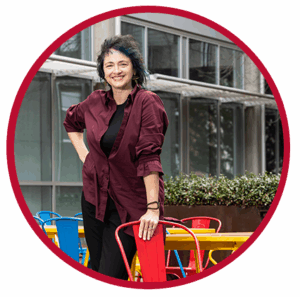
Melisa (Misha) Cahnmann ([email protected])
Co-Director 

Dr. Cahnmann is a Meigs Professor of Education in the Mary Frances Early College of Education’s department of language and literacy education. She is the author of “The Creative Ethnographer’s Notebook,” “Imperfect Tense” and five other books on the arts of language and education. The recipient of numerous NEA Big Read Grants, a NEA Distinguished Fellowship, Hambidge Residency Award and the Beckman Award, her poems, translations and creative nonfiction have appeared in The Georgia Review, Bitter Southerner, Lilith, Poet Lore, Rattle, American Poetry Review, Barrow Street, Hadassah, Plume and elsewhere. Her website is www.melisacahnmanntaylor.com.

 

Mira Kallio-Tavin ([email protected])
Co-Director

Dr. Kallio-Tavin is a Distinguished Professor of Art at the Lamar Dodd School of Art, University of Georgia. Her research focuses on qualitative, post-qualitative and posthuman approaches to artistic and arts-based inquiry. Her artistic practice primarily involves video and painting. Her scholarship engages with critical disability studies as well as more-than-human perspectives in contemporary art practices and educational contexts.


Lu Xi

Lu Xi ([email protected])
Assistant Director

Xi is a second-year doctoral student and graduate research assistant in language and literacy education at the Mary Frances Early College of Education, University of Georgia. Her research explores transnational identities, multilingual and multicultural education, and arts-based approaches to language learning. A dedicated polyglot, Xi is a native speaker of Mandarin Chinese, fluent in Cantonese and English and proficient in Japanese and Portuguese. Connect with Xi on LinkedIn.


Hanxu Chen ([email protected])
Graphic Designer


2026 Competition Jurors

Lynn Sanders-BustleLynn Sanders-Bustle

Dr. Lynn Sanders-Bustle is currently an associate professor and area chair of art education at the University of Georgia. Her research is featured in publications and creative projects that explore topics such as community-based art, participatory art, preservice education and recently more-than-human collaborations and eco-justice. She has published in Geohumanities, the International Journal of Art and Design Education, the Journal of Adolescent and Adult Literacy, the International Journal of Education and the Arts, Art Education and Studies in Art Education.


Rebecca Gose

Rebecca Gose

Rebecca Gose (MFA, BS Ed) was a principal dancer with Garth Fagan Dance Company and has performed a myriad of iconic modern dance works. Currently as professor and head of the department of dance, through both scholarly and creative activity, she explores the intersection of pedagogy and dancer wellness.



Anne Shaffer

Dr. Anne Shaffer serves as associate dean of the Graduate School, where she oversees general operations and supports strategic initiatives to advance graduate education at UGA. She is a professor in the department of psychology, where she mentors doctoral students and maintains an active program of research in clinical and developmental psychology. Her research focuses on risk, resilience and development in the family context, with an emphasis on emotion regulation and communication. She has published over 60 peer-reviewed articles.


Leandro Tadashi

Leandro Tadashi

Leandro Tadashi is a film and TV writer/director and an assistant professor for the MFA in film, TV and digital media program at UGA. Originally from Brazil, Tadashi moved to the United States to pursue his MFA in film and TV production at USC’s School of Cinematic Arts in Los Angeles. He has written and directed several short films, which have screened in over 300 festivals worldwide. He co-directed “Actors Anonymous,” a feature film based on the book by James Franco, and in recent years he developed a drama series for Warner Bros. Discovery and a drama series for Netflix Brazil. Tadashi was the creator and head writer for both projects.

2025 Winners −+

Winners of the 2025 4'33" Competition

From left to right, Asia Meana, Younghyun Kim, Erny ros (Amos) V. Manlangit and Rosangela Araujo Silva

Grand Prize Winner

Younghyun Kim
Ph.D., Learning, Leadership, and Organization Development | Advisor: Aliki Nicolaides
“Rice cook/er as an Intra-Relational Material Inquiry”

Runners-Up

Erny ros (Amos) V. Manlangit
Ph.D., Art, Emphasis in Art Education | Advisor: Mira Kallio-Tavin
“Braiding Stories in the Fold: Rethinking Disability Aesthetics in a Philosophy of Immanence”

Asia Meana
Ph.D., Theatre and Performance Studies | Advisor: David Saltz
“Samuel Beckett’s ‘Krapp’s Last Tape’ in a Post-technological Future”

Rosangela Araujo Silva
Ph.D., Educational Theory and Practice | Advisor: Mariana Lima Becker
“Poem: To Hell with Anyone Who Says Mothers’ Resistance is Something Beautiful”

2024 Winners −+

Jiayi Guo, Michael Gray, Elizabeth Debban, and Zihan “Sandra” Lin-Nanni

Grand Prize Winner

Michael Gray
TESOL and World Language Education | Advisor: Ruth Harman
“Reimagining Literacy Through Manga: A Multimodal Approach to Language Learning”

Runners-Up

Elizabeth Debban
EdS, Art Education | Advisor: Christina Hanawalt
“Listening to Objects: New Materialism in the High School Art Classroom”

Jiayi Guo
Ph.D., Art Education | Advisor: Mira Kallio-Tavin
“Rethinking Pests: A Contemporary Art Practice Connecting Art, Science, and the Natural World”

Zihan “Sandra” Lin-Nanni
Ph.D., Language and Literacy Education | Advisor: Dr. Melisa Cahnmann-Taylor
“An Asian Woman Educator’s Comedy Inquiry”

2023 Winners −+

Winner of the 2023 433 competitionVale Prosper, Isabella Tallman-Jones, Adah Bennion, and Keren Sahar

Grand Prize Winner

Adah Bennion
MFA, Studio | Advisor: Isabelle Loring Wallace

Runners-up

Vale Prosper
Ph.D., Theater and Performance Studies | Advisor: John Bray

Keren Sahar
BFA, Graphic Design | Advisor: Grace Jun

Isabelle Tallman-Jones
MA, Art History | Advisor: Isabelle Loring Wallace

2022 Winners −+

Winners of the 433 competition in 2022

Elizabeth Dubberly, Daniel Karcher, Lyndsey Cole Hadary and Sofía Ruiz

Grand Prize Winner

Daniel Karcher
DMA, Music Composition | Advisor: Peter Van Zandt Lane
Analytical Descriptors for Sonic Spatialization in Music Composition

Runners-up

Elizabeth Dubberly
PhD, Language and Literacy Education | Advisor: Melisa Cahnmann-Taylor
Can a Classroom Sewing and Engineering Activity Provide Insight into Bilingualism?

Lyndsey Cole Hadary
MFA, Performance | Advisor: Anthony Marotta
The Beginning of Things: A Feminist Dreamscape

Sofía Ruiz
MFA, Performance | Advisor: Anthony Marotta
Female Warriors in History

2021 Winners −+

Josina Guess
4’33” Research in the Arts Award Winner
MFA in Narrative Nonfiction
Faculty Advisor: Patricia Thomas
“From Bilali to Bailey”
View Presentation Online

Jonathan Mitchell Vance
4’33” Research in the Arts Finalist
PhD Candidate, Computer Science
Faculty Advisor: Khaled Rasheed
“An Atonal Algorithm and AI Articulation”
View Presentation Online

Leah Dutton
4’33” Research in the Arts Finalist
Major Degree Area: DMA Cello Performance
Faculty Advisor: Dr. David Starkweather
“Prevention, Intervention and Early Recognition of Injuries in String Musicians”
View Presentation Online

2020 Winners −+

Jason Woodworth-Hou, winner of the 2020 4″33″ Research in the Arts Competition.
His presentation was entitled “Redefining Animation: How They Shall Not Grow Old
Redefines Truthmaking Through CGI Animation.”

Other competition finalist include:
Annie Simpson, MFA Studio Art
Atalanta Siegel, MFA Acting
Morgan Tate, PhD Social Studies Education
Nicollette Frank, PhD Elementary Education
Paula Reynaldi, MFA Studio Art
Robyn Acetta, MFA Acting
Sarah Shermyen, PhD English
SungEun Min, PhD, Educational Theory and Practice
Viviane Klen-Alves, PhD TESOL and World Language Education

2019 Winners −+

Participants in the 2019 4'33" competition

Pictured are the participants in the 2019 4 minutes, 33 seconds competition. The winner of the oral presentation was Kathleen McGovern (pictured below with guest judge Kishi Bashi). McGovern is a Language and Literature Education Ph.D. candidate in the College of Education.

Kathleen_McGovern and Kishi Bashi posing together

2018 Winners −+

2018 4 minutes 33 seconds winners

Pictured with Graduate School Dean Suzanne Barbour (center) are (l-r) Samantha Lynn Hudson, an MFA student in dramatic media; Rhia Moreno, a doctoral student in language and literacy education; Kuo Zhang, a doctoral student in the language and literacy education program; and Bridget Dooley, a doctoral student in creative writing. Last November, Kuo won the 4’33” competition in the presentation category, and the other three received awards in the poster competition.

2017 Winners −+

2017 4 minutes 33 seconds

Pictured is the award winner in the presentation category Ally Christmas, a master of fine arts student in the Lamar Dodd School of Art. Poster exhibition winners include: Madison A. Hogan, Undergraduate Major, Department of English; Abigail Kosberg, MA Art History, Lamar Dodd School of Art; and Marlon Burnley, MFA Acting, Department of Theatre and Film Studies.

2016 Winners −+

2016 4 minutes 33 seconds participants

Pictured are the participants in the 2016 4 minutes, 33 seconds competition. The winner of the oral presentation was Meg Hankel, and recipients of the first annual poster competition included Arron Foster, Damon Postle and Kaleena Stasiak.

2015 Winners −+

2015 4 minutes 33 seconds winners

The 2015 winners of the presentation competition are pictured with Georgia Museum of Art Director William Eiland, who served as emcee. Theresa Chafin (left) is a grad student in the Hugh Hodgson School of Music and Beth Fadeley (right) is an art history student in the Lamar Dodd School of Art.

2014 Winners −+

2014 4 minutes 33 seconds winners

Graduate students K. Scott Eggert (left) of the Hugh Hodgson School of Music and Karen Sweeney Gerow (right) of the Lamar Dodd School of Art are the winners of the inaugural 4 minutes, 33 seconds: Spotlight on Scholarship competition. They are pictured with then-Vice Provost Russ Mumper, the emcee of the event.